Planning departments should start with one time-consumingtask, not a big AI decision. That was the message from AIAEC founder and CEOAli Fakih to about 70 planners and engineers at the 2026 APA Arizona StatePlanning Conference on 4 November. His advice: pick one workflow, build theguardrails, run a 90-day pilot and keep people accountable for every output.
AIAEC is a Phoenix software company that builds AI fordevelopers, brokers, architects, engineers and the cities that review theirwork. Ali has spent 20 years submitting plans to Arizona cities as an engineer,and opened by saying so.
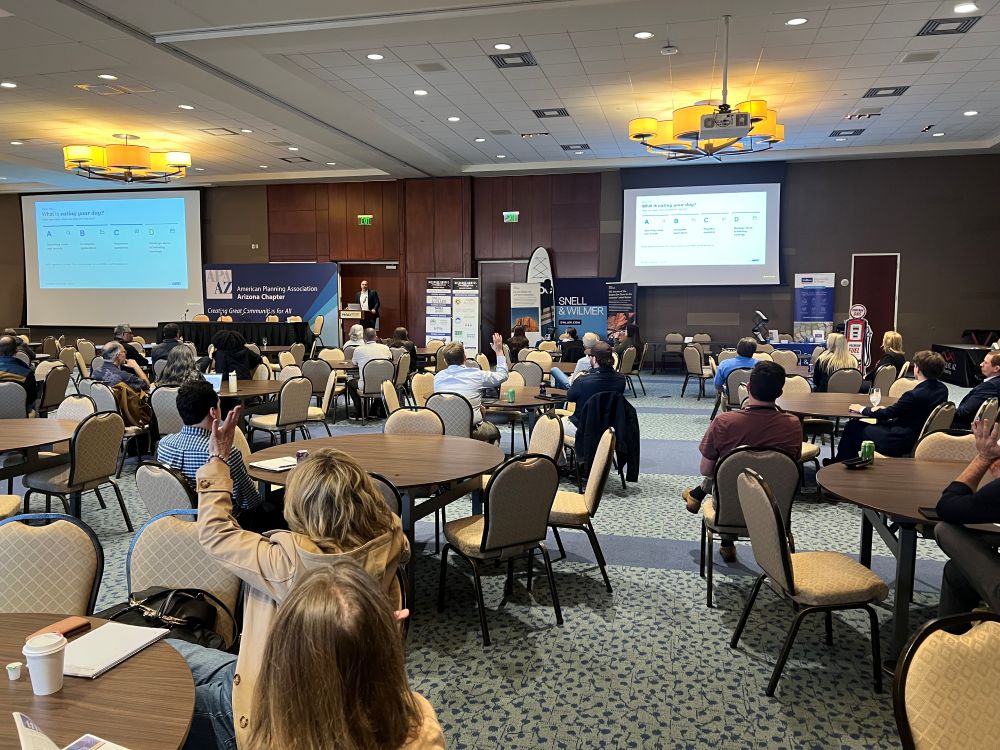
Ali opened with a question: who here wishes they had morework? Out of about 70 people, one hand went up.
He then put a planner's day on screen. The planned day had astaff report, a site plan review and long-range plan work. The actual day had aresident complaint call, an applicant asking which setback applies, an urgentrequest from leadership and a search for an ordinance amendment.
In a quick poll, nearly every hand in the room went up atleast once. Searching codes and records and dealing with incompleteapplications came out almost tied for the biggest time sink, with repetitivequestions close behind.
The idea that landed hardest was the gap between what AIcould do and what it is doing. Drawing on Anthropic's March 2026 research on AIand the labor market, Ali showed that in architecture and engineering about 85%of tasks are theoretically within AI's reach, yet fewer than 10% are done withAI today. That leaves a gap of roughly 75 points.
That gap will close over time, Ali said, and the teams thatclose it deliberately are the ones that get the time back. He was clear thatthis is an adoption story, not a jobs story: Anthropic found no systematic risein unemployment for the most exposed workers since late 2022.
The same gap shows up inside government. MissionSquareResearch Institute found that 46% of state and local government employees useAI at work, but only 28% have received AI training from their employer. In anICMA survey of local government practitioners, just 10% reported havingdesignated staff overseeing AI efforts. Closing that gap, Ali argued, meansmoving from informal experimentation to deliberate, supported use.
Ali pointed to three places to start, each with a personchecking the result:
1. Zoning and land-use research: finding the relevant provisions, withsources to check.
2. Application completeness: checking submittals for missing items.
3. Routine responses: drafting answers to common questions and firstdrafts of summaries and staff reports.
Plan review got its own section. Arizona's SB 1353 (Laws2025, Ch. 187) lets applicants in cities of 30,000 or more turn to qualifiedthird-party reviewers when a single-family permit is not acted on within 15working days. Ali's suggestion was to pick one high-volume, low-risk checklist,such as pools, solar, signs or fences, and run AI alongside the current reviewfor 90 days. The reviewer still signs every letter.

Ali described AI as a very confident intern: it works allnight, never complains and always has an answer, which is sometimes wrong. Histest for any tool is whether it shows the jurisdiction, the effective date,overlays and exceptions, and its citations, and whether it flags what it isunsure of so a planner can decide.
He also gave the room five questions to ask any vendor,including what sources the tool uses, how current they are, and what happens tosensitive municipal data.
The sharpest question was about accuracy: how do you buildguardrails, and how do you track whether they work? Ali's answer was thataccuracy starts low when a pilot begins. It improves as the team embeds more ofits own data and trains the tool to answer within its workflow and guardrails.That is why his pilot scorecard tracks how often staff correct outputs, and whyhe judges a pilot at day 90, not day 10.
When the talk turned to which workflow to pilot first, theroom kept coming back to the systems departments already run. On one point theroom agreed: nobody loved the system they use today for permit review. Theirpriority was clear: any AI tool has to work alongside what they already have,not ask them to replace it.
Ali closed with a five-step plan: identify one workflow,assess accuracy and privacy needs, align planning, IT and leadership, pilotagainst known cases, and evaluate before expanding. Days 1 to 30 set thebaseline and safeguards, days 31 to 60 run a supervised pilot, and days 61 to90 compare and decide. Productivity often dips in weeks 2 to 4 while stafflearn a new tool, so leaders should expect it.
His closing challenge: pick one workflow worth testing,define its safeguards and decide how you will measure success. The goal is notfewer planners. It is more time for judgment and better-informed decisions.
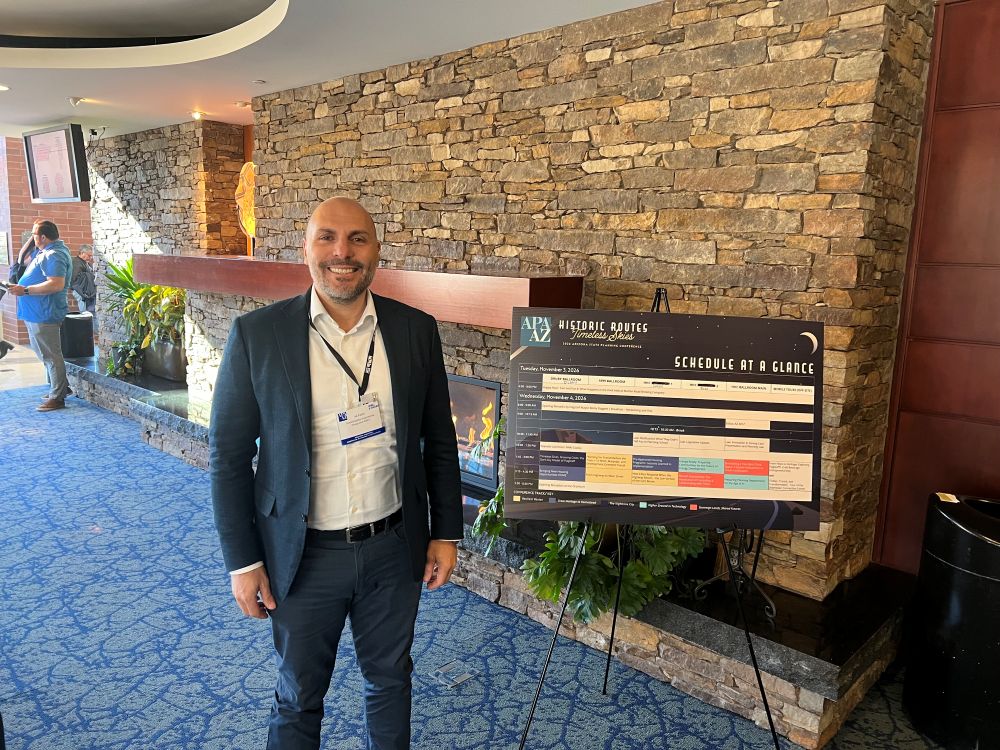
The same rules guide what AIAEC builds. ChatAEC gives citedzoning and due diligence answers, and QPoint checks plan sets against thereview checklist before they go out. Both are built to work alongside thesystems teams already use, and neither replaces the planner, reviewer orprofessional of record.
Want to see how a cited zoning answer works on a parcel youknow? Try ChatAEC free at signin.aiaec.com/sign-up.
· Anthropic, "Labormarket impacts of AI," March 2026 (values read from Anthropic's chart)
· MissionSquare ResearchInstitute, 2025 survey of state and local government employees
· ICMA, 2024 survey of 635local government practitioners
· Arizona SB 1353 (Laws 2025,Ch. 187), as summarized by Arizona Senate staff