May 7, 2026
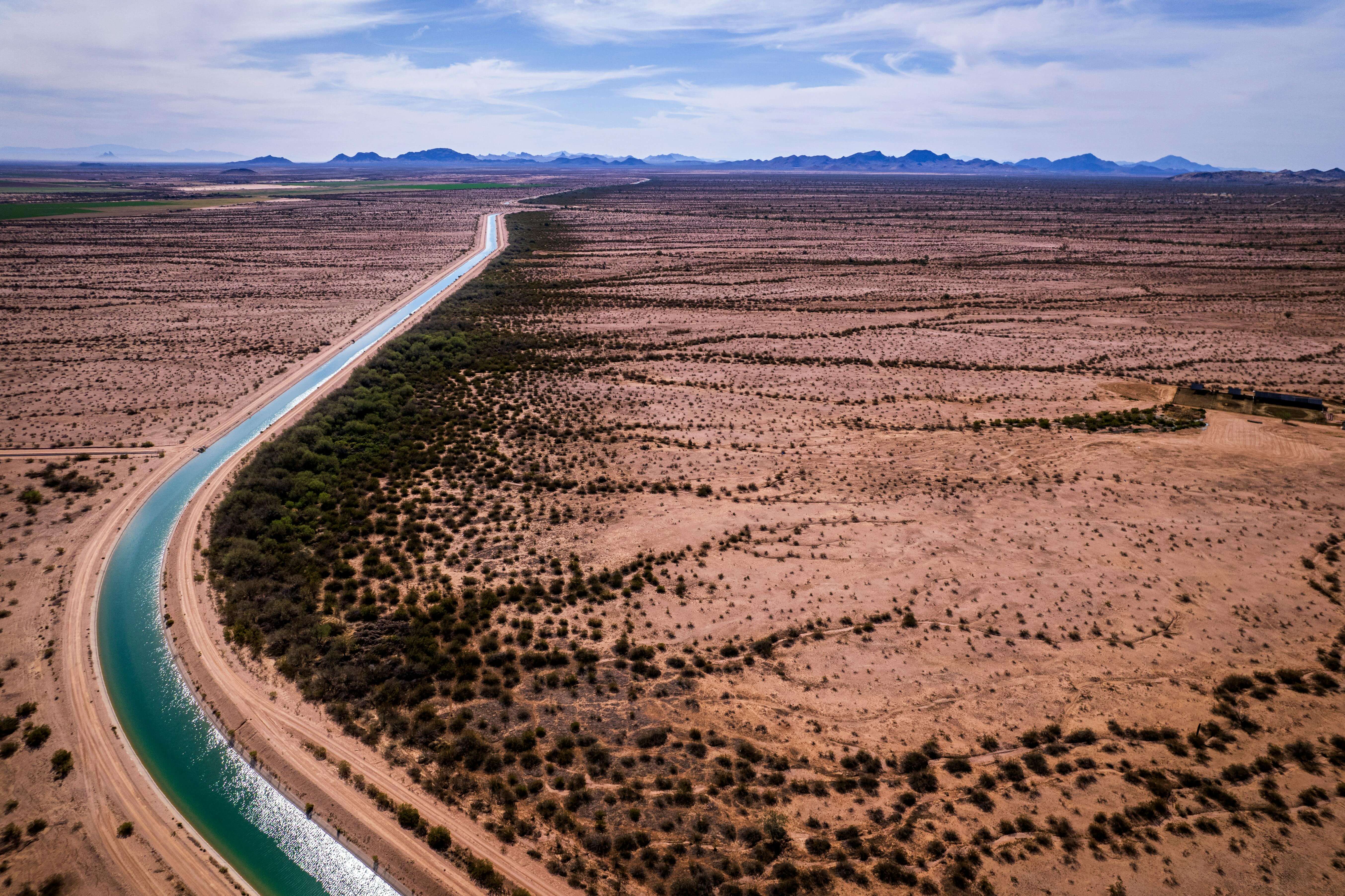
Phoenix, AZ - Arizona added more than 97,000 residents between 2024 and 2025, roughly 266 people per day. Maricopa County alone welcomed over 62,000 of them, ranking first in the country for net migration. That growth is driving demand for new development across the metro, but it's also putting pressure on a water supply that was already stretched thin as Colorado River shortage declarations continue.
If you're developing in Arizona right now, water availability isn't just a regulatory checkbox. It's one of the most actively shifting parts of the approval landscape, and the developers who get caught off guard are almost always the ones who waited too long to ask the question.
Water availability in Arizona operates at two levels, and you need to clear both.
The first is the state level. Arizona's Assured Water Supply (AWS) framework, administered by the Arizona Department of Water Resources (ADWR), requires that new development within an Active Management Area demonstrate a physically, legally, and continuously available 100-year water supply before the Arizona Department of Real Estate will issue a public report allowing lots to be sold. It's not a formality. Without it, you can't close.
The second is the local level. Even where the AWS framework is satisfied by your water provider, municipalities have their own requirements. In Gilbert, for example, engineering approval requires Water Plans and an Executed Water Agreement. Your final plat (the recorded subdivision map) has to show the full water system layout, including fire hydrants, valves, meter vaults, and line sizes. If the project uses reclaimed water for irrigation, there are additional reservoir and cross-connection requirements on top of that.
Both levels have to be addressed. Missing either one creates delays.
In established parts of the metro, the AWS framework is generally handled by the water provider, and it's not usually the sticking point. The risk shows up in two specific scenarios.
The first is the outlying areas. Parts of Buckeye, Queen Creek, and unincorporated Maricopa County have faced real water availability challenges in recent years. In January 2023, Scottsdale cut off water service to the Rio Verde Foothills community, roughly 2,000 homes northeast of the city that had been relying on hauled water from a Scottsdale standpipe. Residents who had been paying $135 for 3,000 gallons suddenly faced costs three times higher as tanker trucks had to travel further for supply. The cutoff came as a direct result of the city's drought management plan and the unprecedented pressure on Colorado River allocations. Many of those residents had no idea it was coming.
It's worth being clear that Scottsdale wasn't acting carelessly. Cities across the Valley are managing finite water resources against some of the fastest population growth in the country, and those decisions get harder every year. The lesson for developers isn't that municipalities are the problem. It's that the pressure on the system is real, and sites that look straightforward on paper aren't always straightforward in practice. Developers who understand that context come to the table better prepared, ask smarter questions, and don't get caught assuming a water source that was available last year will still be available when they break ground.
The second scenario is the regulatory environment itself, which is moving fast. In April 2026, a Maricopa County Superior Court judge struck down two ADWR groundwater policies, the Unmet Demand Rule and the Depth-to-Water Rule, that had been used to restrict new housing development in the Phoenix Active Management Area. The court found that ADWR had not complied with state law in implementing those rules. Experts have called the ruling a potential "death knell" for the 100-year water supply framework as it currently exists. What that means practically for developers is still unfolding, but it signals that the rules governing water availability for new development in Arizona are in active flux.
The water question isn't complicated, but it needs to happen early. Before you put serious money into a site, four things are worth knowing.
First, whether the site is within a designated water service area and which provider serves it. A parcel outside an established service boundary isn't automatically a dealbreaker, but it's a flag that deserves a real answer before you go further.
Second, whether the provider has demonstrated Assured Water Supply compliance. In most of the Phoenix metro this is already handled. In growth areas at the edges of the Valley, it's worth confirming directly rather than assuming.
Third, what the local submittal requirements actually are. The engineering checklist, the water agreement, fire flow standards, reclaimed water rules if applicable. None of these should be a surprise at the end of the process, but they often are because nobody asked at the beginning.
Fourth, whether the site is in a groundwater-dependent area. If a project is relying on groundwater rather than a surface water provider, the requirements are meaningfully different, and the risk is higher, particularly given the current legal uncertainty around ADWR's groundwater policies.
ChatAEC pulls water availability requirements at both the state and local level for any Arizona parcel you're evaluating. Ask it about a site and it'll walk you through the AWS framework, the municipality's engineering and plat requirements, fire flow standards, and reclaimed water rules where they apply. For sites in higher-risk areas, it'll tell you what questions to bring to your attorney or civil engineer before you've committed to either.
That's the point. It's not a replacement for your experts. It's what you use before you need them, so you're walking into those conversations already knowing whether the site is worth their time.
Water availability in Arizona isn't a formality. In the right locations it's straightforward. In the wrong ones, or in a regulatory environment that's actively shifting, it can stop a deal cold. The later you find out, the more it costs you.
Ask the question early. In Arizona right now, the answer matters more than it used to.
ChatAEC helps Arizona developers, brokers, and architects answer early-stage site questions in minutes, including water availability, zoning, and entitlement requirements. Try it free at aiaec.com.
Sources